First Aid Planning for Remote Job Sites in Alberta

Why remote sites change the math
A construction crew working near Grande Prairie isn’t the same risk profile as one working downtown Calgary. How many first aiders a site needs is determined by three things that are tied to this requirement by Alberta OHS: hazard degree, worker count per shift, and travel time to care. When EMS is 45 minutes out instead of 8, coverage is planned differently.
A common scenario worth mentioning
Picture a pipeline crew working a remote stretch northeast of Fort McMurray. Twelve workers, high hazard, closest hospital over an hour away by road. Under Alberta’s framework, that combination usually pushes the site toward more first aiders at a higher level of training than a comparable urban crew would need. The site’s first aid kit contents and equipment are reassessed too. Plans made on paper months earlier are sometimes revised, once the actual drive time gets confirmed.
Basic versus Intermediate, and why it matters here
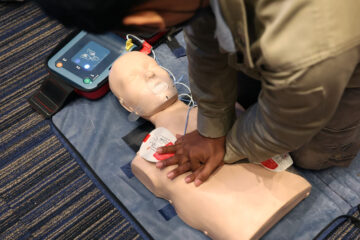
Quite a bit of overlap exists between the core content of Basic (emergency) First Aid and Intermediate (standard) First Aid. Additional skills for longer, more serious response windows are added by Intermediate, which matters when help is genuinely far away. Basic is 1 day, 8 hours. Intermediate is 2 days, 16 hours, or blended, with 5 hours online plus one in-person day. For remote industrial sites, Intermediate or Advanced First Aid is often the more sensible choice, given how long a worker might need care before transport arrives.
Supplies, records, and what employers are on the hook for
Documented training records and available first aid supplies are required of all workplaces, not just active construction sites. This gets overlooked sometimes at smaller operations, though the requirement doesn’t shrink because the crew is small. Training fundamentals are expected to be applied by employers to their own specific site conditions. That responsibility doesn’t end when a certificate is issued; it’s ongoing, and meant to hold up if an OHS Officer ever reviews it.
Renewals and the CPR distinction people mix up
First aid certificates are valid for 3 years in Alberta, which is fairly straightforward. Basic Life Support CPR renewal timelines can differ, though, and mixing the two up is a common error worth avoiding. A 1-day re-certification course is offered to anyone holding a valid Intermediate First Aid certificate, saving time compared to starting over. Providers offering this must appear on the Alberta Approved Training Agencies list, maintained by Alberta OHS, since first aid training is provincially regulated in a way that forklift or Fall Protection training isn’t.
Choosing a provider that fits remote work realities.
Reputable courses are expected to be compliant with Provincial Legislation, follow the most recent CSA standards, meet Industry Best Practices, and follow the Principles of Adult Education. For companies running crews across Alberta’s more remote regions, that consistency matters, since site conditions vary so much from one project to the next. Construction and industrial teams across the province have been supported by Western Canada Fire & Fire Aid on exactly this kind of planning. Getting the coverage right before a project starts is, generally, easier than adjusting it after something happens.
Next steps for your site:
Planning first aid coverage for a remote job site takes more than counting heads and buying a kit. To meet and even exceed OHS compliance, an honest look at hazard level, crew size, and how far help actually is, and first aid equipment; that’s what’s required. Basic (emergency) First Aid, Intermediate (standard) First Aid, CPR Training course options, and Workplace Safety training are offered by Western Canada Fire & Fire Aid, built around Alberta’s requirements.
FAQ
Does a remote site need more first aiders than a city site?
Usually, yes, and first aiders with a higher level of training. The requirement is based on the degree of hazard, not just crew size; distance to care is factored in too. A high-hazard site an hour from Fort McMurray is treated differently than the same site within Edmonton. Assessed case by case, I suppose.
What happens if EMS response time is over an hour?
Then more first aiders are typically expected on shift, along with additional supplies. This gets decided during the risk assessment, not after an incident happens. Employers are expected to document this planning so it can be reviewed by an OHS Officer, if needed.
Fair point to ask: can Intermediate First Aid be done partly online?
Good question. The theory portion can be completed online or in a classroom, but all hands-on practical skills must be demonstrated in person with an approved trainer. Five hours online, one day in person; that’s the blended structure. No shortcuts on the physical skills portion, though.
Are first aid certifications recognized outside Alberta?
They are, generally speaking, since Alberta training follows CSA Standard Z1210-17, which harmonizes certification across provinces. A worker certified in Alberta can usually have that certificate recognized elsewhere, as long as it’s accepted by the employer. One less thing to worry about, for companies operating across Western Canada.


0 Comments