First Aid & CPR Training Courses
Western Canada Fire & First Aid Inc. has adopted the Saga Universal Training Corp.’s First Aid Programs as an Authorized Training Partner.
Our first aid programs incorporate the latest CSA Z1210-17 standards and Alberta Plus guidelines approved by Alberta Occupational Health and Safety (OHS).
The introduction of the CSA standards is to harmonize first aid programs through-out Canada.
All of our first aid programs contain level C CPR & AED.
Voted “Best First Aid Course in Edmonton” by CommunityVotes 2025.
Now offering Blended First Aid programs.
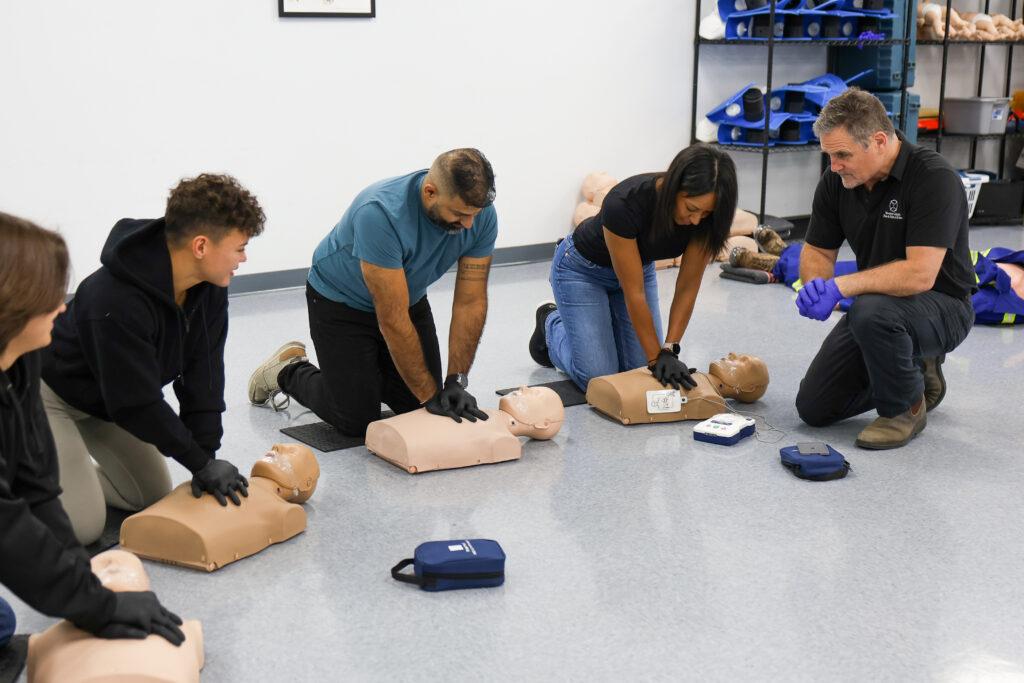
Intermediate First Aid
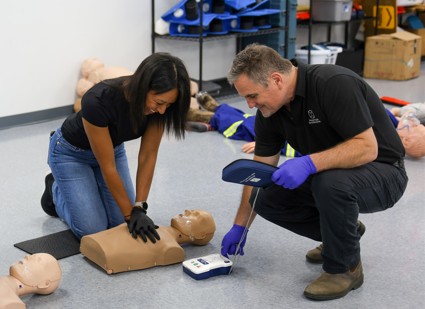
Western Canada Fire & First Aid’s Intermediate First Aid course follows the new CSA standards and the “Alberta Plus” standards.
This instructor-led course is approximately 16-hours in duration and is spread over 2 days of instruction.
Intermediate First Aid Blended
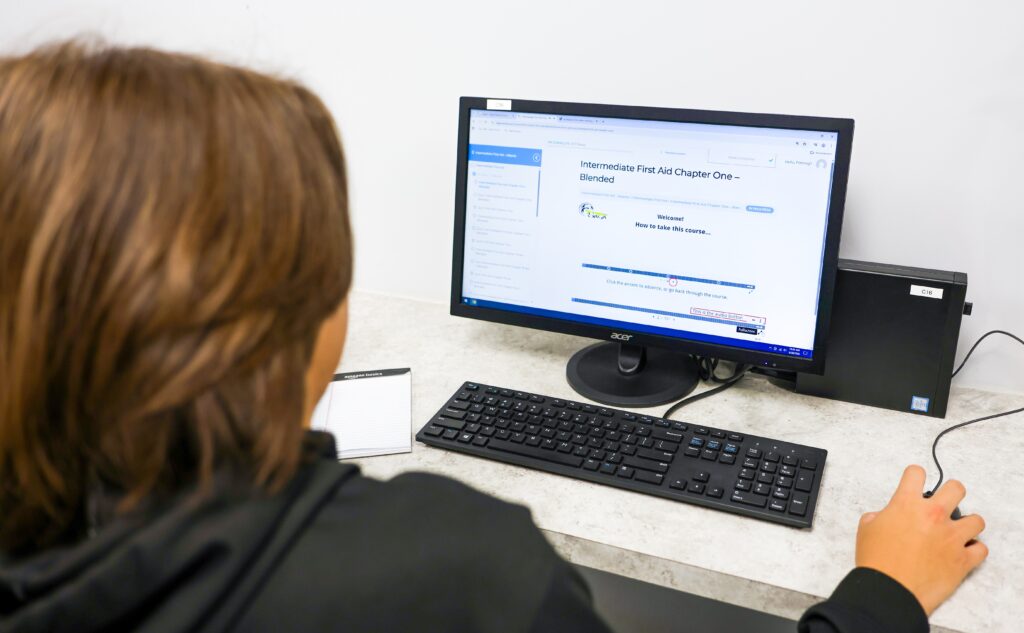
Western Canada Fire & First Aid’s Blended Intermediate First Aid is two parts. Online theory and in-person practical skills.
This is an alternative to the 2 day instructor-led course.
Basic First Aid
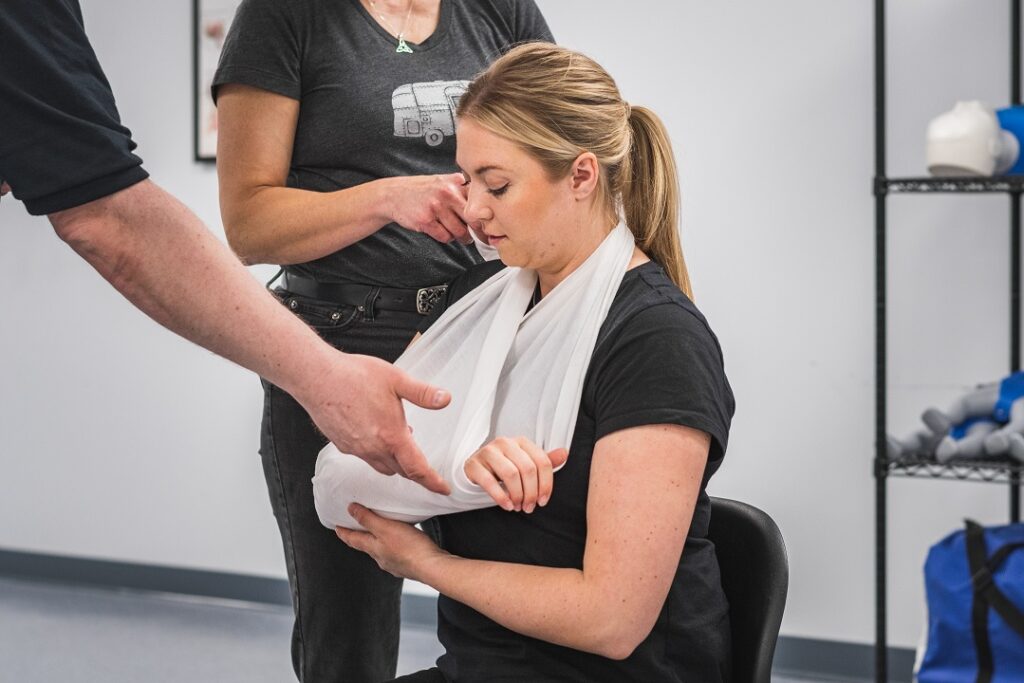
Western Canada Fire & First Aid’s Basic First Aid course follows the new CSA standards and the “Alberta Plus” standards.
This instructor led course is approximately 8-hours in duration.
Intermediate First Aid Recertification

Western Canada Fire & First Aid’s Intermediate First Aid Re-Certification course is intended for those needing re-certification. Students must have a valid Intermediate First Aid Certificate.
This instructor-led course is approximately 8-hours in duration.
FAQs
For most medium to high-hazard jobs in Alberta that require first aid, Intermediate First Aid with CPR/AED Level C is a good choice. Most low-hazard jobs are fine with Basic First Aid with CPR/AED Level C. Western Canada Fire & First Aid offers Alberta-approved first aid training to help you meet your workplace requirements.
CPR training is important because emergency services can take time to arrive, and the immediate use of an AED along with CPR can increase the chance of survival by 75%. CPR helps maintain blood flow and deliver oxygen to the brain and other vital organs until professional medical help arrives. Knowing CPR can improve a person’s chance of survival during a life-threatening emergency.
First Aid Certificates offered by Western Canada Fire & First Aid (WCFF) are valid for 3 years. Before your certificate expires, you can recertify by completing a 1-day recertification course to keep your training current.
The main difference is how the course material is delivered. A blended first aid course lets you complete the theory portion online at your own pace. Once you finish the online portion, you attend a 1-day in-person session to complete the practical training. An in-class course covers all the required theory and practical training in person, during one continuous session.
You don’t have to choose between first aid and CPR. Western Canada Fire & First Aid (WCFF) offers courses that include both first aid and CPR certification, allowing you to complete both certifications together. This gives you the skills you need to respond to a wide range of emergencies. If you only require a CPR update, you may take our Basic Life Support CPR course.
Basic First Aid is meant for low-hazard work and takes about 8 hours. Intermediate First Aid is for medium- to high-hazard work, takes about 16 hours, and builds on Basic First Aid by adding additional skills. Both courses cover the same core modules, including Airway Management, Breathing Management, Medical Emergencies, and Spinal and Neurological Emergencies. The core content is similar; the depth and skill requirements are not. Both courses include Level C CPR and AED.
Not always. First Aid is provincially recognized and Alberta requires training that includes “Alberta Plus” content. However, the introduction of the latest CSA Z1210 standards is meant to harmonize workplace first aid training and certification names across Canada, reducing differences between provinces and territories. Check with your employer or call WCFF at 780-469-4887 before you start work.
Yes, if it’s the equivalent level. For example, a student with a valid British Columbia Level 2 first aid ticket may renew/re-certify with the Alberta Intermediate First Aid Re-certification course. If your certificate has expired, you must take the full Intermediate First Aid course.
You’ll practise CPR and other skills on the floor, which involves kneeling and bending. If you have an injury or condition that could affect this, let the instructor know ahead of time.
Yes. WCFF also offers H2S Alive, Fall Protection, Confined Space, Ground Disturbance, Powered Mobile Equipment, and other courses, so you can manage your team’s training through one provider.
First, match the course level to your workplace hazards. Basic First Aid (about 8 hours) suits most low-hazard jobs. Intermediate First Aid (about 16 hours) is typical for medium- to high-hazard sites. Check with your employer if you’re unsure.
Next, choose a learning format. In-person courses cover everything in class. Blended courses let you do the theory online, then attend a 1-day practical session.
Finally, verify your instructor and provider. Workplace first aid must come from an Alberta OHS-approved agency, so check the Government of Alberta’s approved list before booking.
Most first aid courses take 1 to 2 days (8 to 16 hours), depending on the course. Basic First Aid is about 8 hours over 1 day. In-person Intermediate First Aid is about 16 hours over 2 days. The Blended Intermediate First Aid course lets you finish the theory online at your own pace, then attend a 1-day in-person session for the practical skills. If you already hold a valid Intermediate certificate, the recertification course takes about 8 hours over 1 day.