Forklift Certified Training in Alberta: What to Expect Before Certification
Before the Course Even Starts
A formality is what many workers assume forklift certified training to be, something to get through before returning to the floor. In many cases, that assumption gets corrected fast. Compliance with Provincial Legislation is expected of reputable courses, along with following the most recent CSA standards, meeting Industry Best Practices, and following the Principles of Adult Education. That’s a lot packed into what might look like a half-day class. On a construction site outside Edmonton, one supervisor mentioned that new hires were often surprised by how much education and structure sat behind what they figured was routine equipment training.
The Knowledge Portion
Training starts with theory instruction, and testing follows, not just a review. Legislation, safe work practises, Load capacity, stability triangles, job planning and hazard assessments are usually covered as topics. This part can happen online or in a classroom, depending on the provider. Either way, understanding must be demonstrated before moving forward. Skipping ahead isn’t really an option here. In most cases, an hour or two is taken up by this portion, though it depends somewhat on class pace and group size, which tends to run between 6 and 20 participants for related safety courses.
Then Comes the Practical Test
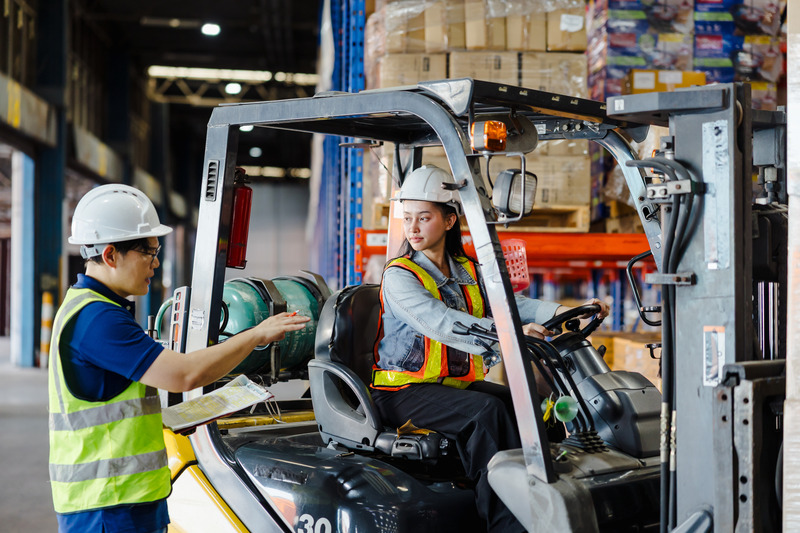
After theory, the hands-on portion begins, and this is where students apply their knowledge to the skills portion. Basic operation, maneuvering, load handling, and stacking are performed by operators under direct supervision of a competent operator. A trainer watches closely, since this segment is both instructional and evaluative at the same time. For a new operator, this whole process, theory plus practical, typically runs 6 to 8 hours. Timing shifts depending on how quickly someone picks up the controls; some workers move through it faster than others, which is fairly normal.
What Training Providers Are Expected to Meet
Compliance with Alberta’s occupational health and safety laws is required for the training course, and more responsibility is carried by employers here than some expect. Training providers must be accepted by employers themselves, rather than relying on outside recognition alone. That shift puts pressure on businesses to actually vet who they’re hiring for this. A construction firm operating across Alberta, for instance, might work with a provider like Western Canada Fire & Fire Aid specifically because course structure and content were part of the conversation upfront.
Costs and What Affects Them
Pricing for forklift certified training generally falls between $175 and $425. That range depends largely on the operator’s skill level going in, not on how large the class happens to be. A worker with prior equipment experience might be moved through faster, and less might be spent overall on training. Someone starting from scratch may need more time with the trainer, which can shift the price upward. Anyway, that’s usually where it clicks for employers budgeting across multiple hires.
Retraining and When It’s Required
Certification doesn’t last forever, and it isn’t meant to. Retraining becomes necessary when an operator has been away from forklift work for an extended stretch, but it’s also required if a forklift incident involves that operator, regardless of fault. This gets treated as a reset, not a punishment. Training fundamentals are expected to be applied by employers to their specific workplace afterward, since a certificate alone doesn’t guarantee competency on a particular site or equipment type.
Getting Started With Certified Training
Forklift operators in Alberta must take training and certification to comply with provincial safety legislation, prevent site accidents for operators, pedestrians, and equipment and keeps employers clear of costly regulatory fines.. For construction and industrial businesses across Alberta looking to schedule Forklift Training, CPR Training course options, or First Aid Training course sessions, help can be found through Western Canada Fire & Fire Aid. Visit our website to learn more.
FAQ
Do I need an Alberta driver’s license to operate a forklift?
No, it isn’t legally required. That said, holding one tends to help. Faster adjustment to pedals, steering, and situational awareness is often shown by workers who’ve driven before, since those controls carry over. Not always, but often enough to matter.
Is theory instruction required, or just the hands-on part?
Both are required. Theory instruction, whether completed online or in a classroom, covers the knowledge portion; it’s tested separately from the practical skills. Hands-on demonstration must still happen in person with an approved trainer.
Does training cover different types of forklifts, like reach trucks?
Yes. Narrow-aisle reach trucks and powered pallet jacks are expected to be addressed by reputable programs, alongside standard counterbalance units, since worksites rarely use just one type. Coverage depends on what the employer’s operation actually uses, sometimes more than people expect.
What happens if an operator is involved in an incident?
Full retraining is generally expected, not just a quick check-in. This applies whether the incident was caused by the operator or simply involved them. It’s treated as a reset point rather than a formality.

0 Comments