what skills are tested during forklift training practical sessions?
Why Practical Testing Exists
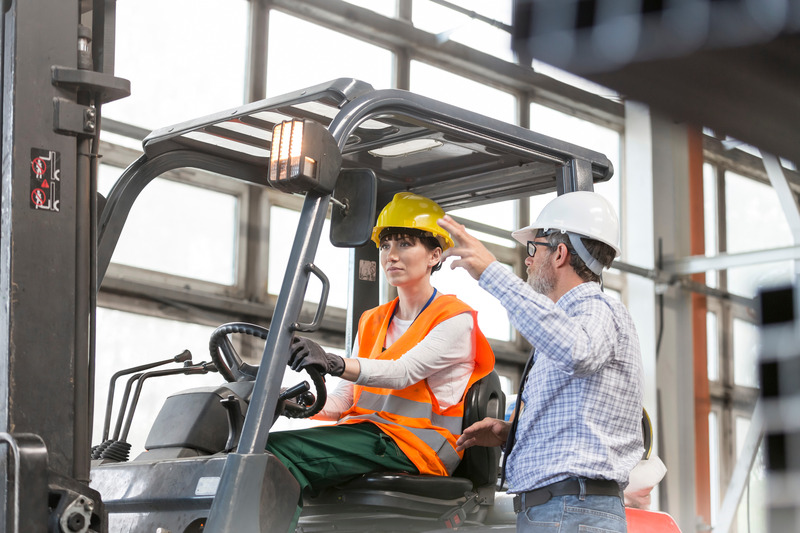
Written knowledge only goes so far on a construction site. A worker can pass a quiz about load limits and still misjudge a stack under pressure; that gap is exactly why practical sessions matter. In Alberta, a knowledge portion with testing must be included in training, followed directly by a practical hands-on skill demonstration and testing portion. Theory instruction can happen online or in a classroom, but the practical piece is always done in person with a competent trainer. Compliance with Alberta’s occupational health and safety laws is required for the training course, and that requirement isn’t optional depending on industry.
The Four Core Skills
Practical sessions are streamlined around four areas: basic operation, maneuvering, load handling, and stacking. On a busy Calgary yard, for instance, a new operator might handle basic operation fine but struggle with stacking under time pressure. That’s fairly common, actually. Control and consistency across all four, that’s what trainers are watching for, not just whether the forklift ends up in the right spot.
How Long It Actually Takes
Six to eight hours is the general window for a new operator to learn the basics, though that number depends heavily on the operator’s skill level going in. Someone with prior equipment experience might move faster; someone new to industrial work often needs more repetition on load handling specifically. Costs for the course tend to run $175 to $425, and that range is shaped by the forklift operator’s skill, along with how much supervised time is needed. Nothing about this is rushed. Or at least it shouldn’t be.
Who Decides the Program Is Good Enough
Reputable courses are expected to be compliant with Provincial Legislation, follow the most recent CSA standards, meet Industry Best Practices, and follow the Principles of Adult Education. Unlike First Aid Training course requirements, there’s no government-maintained approved list for forklift providers in Alberta. Instead, training providers must be approved by employers themselves; real responsibility is shifted onto the business this way. That program still has to hold up if an OHS Officer ever asks questions about it. Anyway, that’s usually where the gap between “checked a box” and “actually trained” becomes obvious, in a way.
After Certification, the Work Isn’t Done
Certified training gets an operator through the door, but those fundamentals are still expected to be applied by employers to the specific worksite. A forklift routine that works in an open warehouse doesn’t automatically translate to a tight industrial yard near Fort McMurray with limited visibility. This is where workplace-specific orientation matters, and it’s frequently skipped. Liability is faced by employers if uncertified operators are involved in workplace accidents, which is one more reason this step gets taken seriously.
When Retraining Comes Back Into Play
Full retraining isn’t limited to operators who’ve been away from forklift work for a while. It also applies to anyone involved in a forklift incident, regardless of how experienced they were before. This is a fairly recent shift in how the requirement gets applied, and over time, it reflects a broader move toward Workplace Safety training that treats incidents as learning points rather than one-off failures. Skills fade; judgment can slip too. Funny thing, really.
Getting Started With Certified Training
Construction and industrial businesses across Alberta that need practical, in-person forklift training are worked with by Western Canada Fire & Fire Aid, alongside CPR Training course and First Aid Training course offerings. The goal is straightforward: operators who can demonstrate real competence, not just recall it. Visit our website to learn more about scheduling a session that fits your crew’s timeline and worksite conditions.
FAQ
Q: Is a written test required before the practical session?
Yes. A knowledge portion with testing must be included in training, followed directly by hands-on skill demonstration and testing. The written piece is completed first; it’s treated as a prerequisite rather than an afterthought.
Q: Does training cover more than one type of forklift?
Yes. Many courses in Alberta include narrow-aisle reach trucks and powered pallet jacks alongside standard counterbalance units, since more than one type is rarely used on worksites in construction and industrial settings. Coverage depends on the training provider and, in a way, the equipment available on site.
Q: Do I need an Alberta driver’s license to operate a forklift?
No, it isn’t legally necessary. That said, holding one tends to help, since a head start on basic vehicle controls, like pedals, steering wheels, and seat belts, is given to workers this way. It’s not a requirement written into the course; it’s more of a practical advantage.
Q: What happens if an operator fails the practical portion?
Retesting is typically arranged, and in most cases, the specific skill needing more work is identified by the trainer rather than the whole session being repeated. Full retraining is expected if an operator is later involved in a forklift incident, regardless of how long they’ve held certification. It’s less about punishment; more about closing a gap.
0 Comments