First Aid for Shift Workers: Building Team Safety Readiness
Why Shift Coverage Is a Compliance Issue, Not Just a Scheduling One
Rotating shifts are standard across Alberta’s construction and industrial sectors. What isn’t always standard is how first aid coverage gets tracked across those rotations. Under Alberta OHS requirements, adequate first aid coverage must be maintained on every shift, and that coverage is determined by the degree of hazard, the number of workers on shift, and the distance to the nearest healthcare facility. A site with 20 workers on days and 6 on nights still needs a qualified first aider present during the night rotation; the obligation doesn’t scale down just because the headcount does. Over time, that gap tends to surface at the worst possible moment.
Understanding the Two Core First Aid Courses
Two course levels are relevant for most Alberta workplaces. Basic (Emergency) First Aid is a 1-day, 8-hour course. Intermediate (Standard) First Aid runs 2 days, totalling 16 hours, and both cover similar core content, including Airway Management, Breathing Management, Cardiovascular Emergencies, Medical Emergencies, and Spinal and Neurological Emergencies. Additional skills are required by Intermediate beyond what Basic covers, making it more appropriate for higher-hazard environments like those involving confined spaces, chemical exposure, working at height, or powered mobile equipment. Intermediate can also be completed in a blended format: 5 hours of theory instruction online, followed by 1 full day of in-person practical skills. Either way, hands-on practical skills must be demonstrated in person with an approved trainer.
What “Approved Training” Actually Means in Alberta
Not every first aid course meets Alberta’s requirements. Reputable courses must be compliant with Provincial Legislation, meet the most recent CSA standards, meet Industry Best Practices, and follow the Principles of Adult Education. Alberta’s regulations also align with CSA Standard Z1210-17, which harmonizes certification across Canada. Training providers must appear on the Alberta Approved Training Agencies list, provided by Alberta OHS, and employers must approve training providers themselves, confirming the program meets requirements that would hold up under OHS inspection. That responsibility sits with the employer, not the training company. That sounds straightforward on paper, but in practice it’s a step that gets skipped more often than it should.
How Training Is Structured and What It Tests
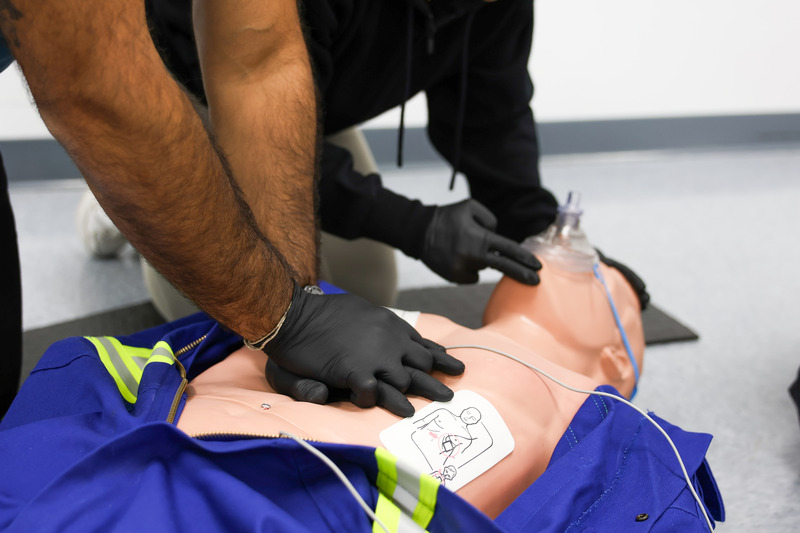
A properly structured first aid course isn’t just a lecture. A knowledge portion with testing must be included, followed directly by a practical hands-on skill demonstration and testing portion. Theory instruction can be completed in a classroom or, for Intermediate, partially online, though the practical component always happens in person. Class sizes typically range from 6 to 20 participants, which keeps the hands-on portions manageable. After certification is issued, those training fundamentals are expected to be applied by employers to their specific workplace, making sure workers can actually perform the skills in the conditions they’ll face on site. That last part, I suppose, is often where the real gap shows up.
Renewal Timelines and the Re-Certification Option
First aid certifications issued in Alberta are valid for not more than 3 years. Basic Life Support CPR has its own separate renewal requirements, which differ from the main first aid certificate timeline. Workers who currently hold a valid Intermediate (standard) First Aid certificate have access to a 1-day re-certification course, rather than repeating the full 2-day program; that’s a practical option for employers managing large teams across multiple shifts. Renewal dates should be mapped to individual workers, rather than just tracking who was trained, and from what we’ve seen, this is probably the most common documentation gap that OHS inspectors flag during site visits. Interesting how that works.
Shift-Specific Planning for Industrial Environments
Industrial sites in Alberta often involve hazards that go beyond general workplace risks. Working at height, powered mobile equipment, confined spaces, and exposure to hazardous materials all affect what level of first aid coverage is required and how many certified workers need to be on shift at any given time. A low-hazard office environment and a high-hazard industrial site are not evaluated the same way. The degree of hazard classification directly influences the number of first aiders required per shift. That’s usually where it clicks for safety managers: coverage isn’t a single number applied across the board, it’s calculated per shift, per site, per hazard level.
Documentation and Supplies: Both Are Mandatory
Documented training records and readily available first aid supplies are mandatory requirements for all Alberta workplaces. Not just construction sites. Not just high-hazard environments. All workplaces. Records should reflect which workers are certified, at what level, and when their certificates expire; supplies need to be accessible during every shift, not just stocked in a cabinet that gets checked once a year. From what we’ve seen, documentation gaps are often discovered only after an incident, which is, to be fair, a difficult position for any employer to be in. Keeping records current and tied to shift schedules is a straightforward way to stay ahead of that, bit by bit.
Building a Training Plan That Works Across Rotations
Getting first aid coverage right across rotating shifts takes some planning, but it’s manageable. Shift schedules should be mapped against currently certified workers, and rotations with gaps should be identified before those gaps become a compliance issue. From there, the course level required is determined by hazard classification: Basic (Emergency) First Aid works for lower-hazard environments, while Intermediate (Standard) First Aid is the right fit for most construction and industrial sites. Training providers must be on the Alberta Approved Training Agencies list, and all training must comply with Alberta’s occupational health and safety laws. For Alberta construction and industrial employers looking to build consistent safety readiness across every shift, visit wcff.ca to learn more about available First Aid Training courses and Workplace Safety training options.
FAQ
Q: Does every shift need its own certified first aider, or does one certificate cover the whole workplace?
Every shift needs coverage. A certificate held by a worker on days doesn’t extend to nights or weekends when that person isn’t present. Alberta OHS requirements are applied to each shift independently, based on hazard level, worker count, and proximity to a healthcare facility. Not just the busiest shift. That still surprises people.
Q: What’s the difference between Basic (Emergency) First Aid and Intermediate (Standard) First Aid for industrial workers?
Both courses cover core emergency response, but they aren’t identical. Intermediate (standard) First Aid covers additional skills beyond what Basic (emergency) First Aid requires, making it the more appropriate choice for higher-hazard environments. The core content is similar; the depth and practical requirements differ. All hands-on practical skills must be demonstrated in person with an approved trainer, regardless of which course is taken.
Q: How do employers know if their first aid training provider is approved?
Training providers must appear on the Alberta Approved Training Agencies list, which is maintained by Alberta OHS. Employers must approve training providers themselves and ensure the program can withstand scrutiny from Occupational Health and Safety Officers. Compliance with Alberta’s occupational health and safety laws is required for the training course. Worth confirming before booking.
Q: What happens after workers are certified?
Yes, there’s a step that’s often missed. After certification is issued, employers are expected to take the training fundamentals and apply them to their specific workplace to ensure worker competency. The certificate is the starting point, not the finish line. Employers carry the responsibility of making sure trained workers can actually apply what they’ve learned in the context of their own site.



0 Comments