Lift Truck (Forklift) Training Cost in Alberta: Pricing and Requirements
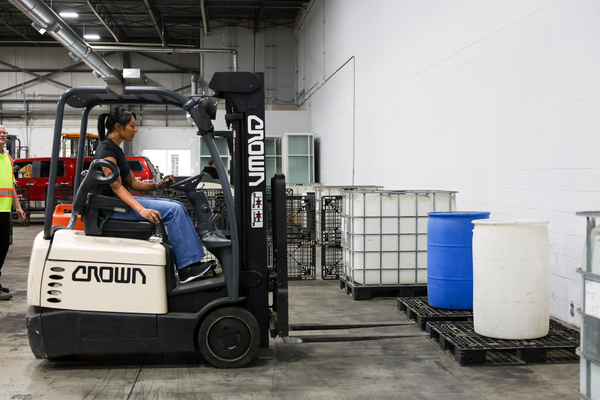
What Lift Truck (Forklift) Training Actually Costs in Alberta
Pricing for Lift Truck (Forklift) training in Alberta generally falls between $175 and $425 per operator, and that range is wide for a reason. How much is paid tends to vary depending on a forklift operator’s skill level coming into the course; someone with prior experience on similar equipment will move through the material faster than someone who has never operated powered mobile equipment. On-site training at a worksite may also be priced differently than courses held at a provider’s facility.
What Alberta OHS Requires for Lift Truck (Forklift) Operators
Alberta’s occupational health and safety legislation is clear on this point: operators of powered mobile equipment, including Lift Truck (Forklift), must receive certified training before working independently. Compliance with Alberta’s occupational health and safety laws is required for the training course itself. Training providers must be approved by employers, and the program must be confirmed to meet provincial standards. A course that looks credible on paper isn’t always sufficient; the training needs to hold up if it is reviewed by an OHS Officer. That responsibility sits with the employer directly, and over time, the cost of getting it wrong tends to outweigh the effort of getting it right.
How Lift Truck (Forklift) Training Is Structured
A standard Lift Truck (Forklift) training course is divided into two parts. The first is theory instruction, which covers equipment types, load capacity, pre-use checks, workplace hazards, and Alberta-specific regulations, and a knowledge test is included in that portion. The second part is a hands-on practical session covering basic operation, maneuvering, load handling, and stacking; testing is conducted alongside supervised operation. Both parts are required. For a new operator learning the basics, the full process typically takes 6 to 8 hours, though timing ultimately depends on the operator’s skill level. Some move through it faster; others need more time on the practical side.
Equipment Types and Why They Matter for Pricing
Not all Lift Trucks (Forklift) are the same, and that affects both training scope and cost. Counterbalance forklifts are the most common type covered in general forklift training, but many Alberta worksites, particularly in warehousing and industrial settings, also rely on narrow-aisle reach trucks and powered pallet jacks. Each of these operates differently. If more than one equipment type needs to be trained on, that adds time and, in most cases, additional cost. Exactly which equipment operators will be using should be identified before training is booked, rather than assuming a single course covers everything on the floor.
What Makes a Lift Truck (Forklift) Training Provider Legitimate
Employers must approve training providers, which means some due diligence is required before anyone is signed up. A reputable forklift training course should be compliant with Provincial Legislation, meet the most recent CSA standards, meet Industry Best Practices, and follow the Principles of Adult Education. A knowledge portion with testing must be included, followed directly by a practical hands-on skill demonstration and testing portion. After certified training is issued, the training fundamentals are expected to be taken by employers and applied to their specific workplace to ensure worker competency. That sounds straightforward on paper, but a certificate alone doesn’t confirm an operator is ready for your specific site conditions.
On-Site vs. Facility-Based Training: What Changes
Some Alberta employers bring a trainer to their worksite; others send operators to a training centre. Both approaches can meet OHS requirements, provided the provider and course content are appropriate. On-site training has the advantage of using the actual equipment operators will work with day-to-day, which tends to make the practical session more relevant. Facility-based training is often easier to schedule and may cost less per person, depending on the provider. In many cases, that’s where the realization sets in for employers: the location matters less than the quality of the provider and whether the course content actually reflects their workplace. Interesting how that works, really.
When Retraining Is Required
Certified training doesn’t last indefinitely, and certain events trigger the need for full retraining rather than a simple refresher. Operators who have been away from forklift work for an extended period are expected to go through full retraining before returning to independent operation; the same applies to operators who have been involved in a forklift incident. In those cases, a refresher course isn’t considered sufficient. That determination must be made by the employer, and it must be documented properly. Keeping training records current is a mandatory requirement for all workplaces, not just high-hazard sites, and those records tend to be among the first things an OHS Officer will ask to see. To be fair, that last part catches a lot of employers off guard.
How Western Canada Fire & First Aid Can Help
For construction and industrial employers in Alberta, sorting out forklift training requirements alongside broader workplace safety obligations can take time. Western Canada Fire & First Aid supports businesses in understanding what certified training looks like, what Alberta OHS legislation requires, and how a training program can be built to hold up under review. Whether a program is being started from scratch or an existing one is being updated, getting the right information early saves time and reduces risk. Visit our website to learn more about Forklift Training and Workplace Safety training options available through Western Canada Fire & First Aid.
FAQ
Q: Is Lift Truck (Forklift) certified training legally required in Alberta?
Yes. Alberta’s OHS legislation requires that operators of powered mobile equipment, including forklifts, receive certified training before operating the equipment independently. That training must include a knowledge portion with testing, followed directly by a practical hands-on skill demonstration and testing portion. Training providers must be approved by employers, and the program must be able to withstand scrutiny from Occupational Health and Safety Officers.
Q: Does Lift Truck (Forklift) training cover multiple types of equipment?
Yes. A reputable Lift Truck (Forklift) training course will address the specific classification an operator is expected to use, which can include counterbalance forklifts, narrow-aisle reach trucks, and powered pallet jacks. That said, each equipment classification has its own operating characteristics, so training should be tied to the specific machine. Operators switching to a different type of equipment are typically expected to receive additional training on that unit. That still surprises people.
Q: Do I need an Alberta driver’s license to operate a Lift Truck (Forklift)?
No, an Alberta driver’s license is not legally required to operate a forklift, unless operating on public roadways. Holding one can, however, help workers understand basic vehicle controls, including pedals, steering wheels, and seat belts, which does make the transition into forklift operation a bit smoother for some operators.
Q: When does an operator need full retraining rather than a refresher?
Good question. Full retraining is generally required when an operator’s certificate has expired, the operator has been away from forklift work for an extended period or has been involved in a forklift incident. A refresher may be appropriate in other cases, but the decision ultimately rests with the employer, who is responsible for confirming the operator is competent before returning to independent operation.

0 Comments