What Modules Are Covered in First Aid Training?
What First Aid Training Actually Covers
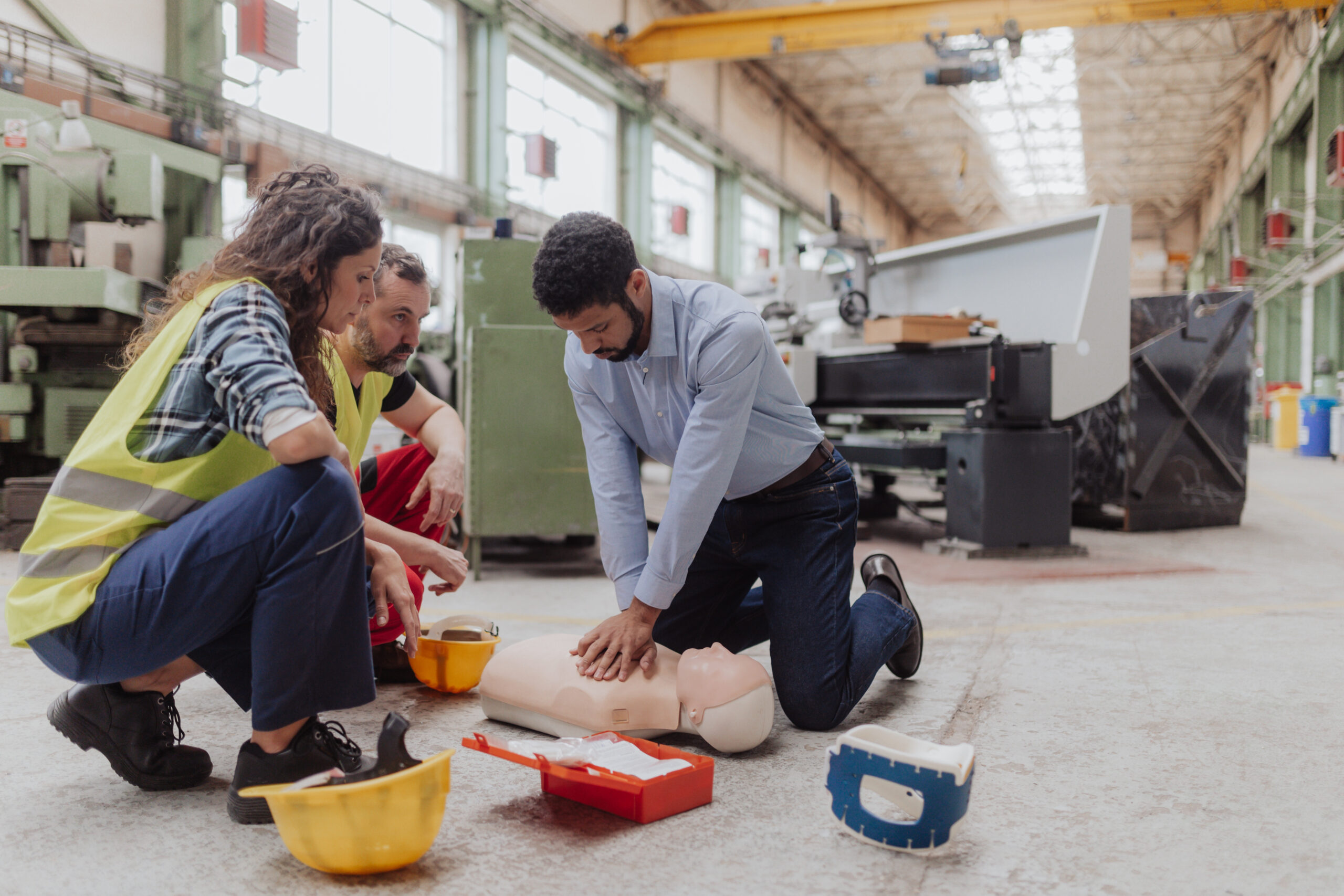
First aid training is built around a structured set of modules, not a loose collection of tips. In Alberta, approved courses are required to meet CSA Standard Z1210-17, which means the curriculum is held consistent across providers listed on the Alberta Approved Training Agencies list. These core modules are covered: Principles of Workplace First Aid, Management of Injured/ill workers, Airway Management, Breathing Management, Circulation Management, Injury Management, Medical Emergencies, Transportation Management and Spinal and Neurological Emergencies. These aren’t arbitrary categories. They reflect the kinds of emergencies that actually occur on job sites, in warehouses, and in industrial facilities across the province. Each module is delivered through theory instruction first, then confirmed through hands-on practical skills.
Airway Management: The First Priority in Any Emergency
Airway Management is typically one of the first modules addressed, and for good reason. A blocked or compromised airway can become fatal within minutes. How to assess an airway, position an unconscious person correctly, and clear obstructions are all skills that workers are expected to learn here. Techniques like the head-tilt chin-lift and recovery position are practiced repeatedly during the in-person component. Theory instruction explains the anatomy and the reasoning behind each step, though the skill itself is only confirmed through hands-on demonstration with an approved trainer. In construction and industrial settings, where falls and impacts are common, this module is given particular weight.
Breathing Management: Recognizing When Intervention Is Needed
Breathing Management builds directly on airway skills. Workers are taught to assess whether a person is breathing effectively, and what steps should be taken when they aren’t. The CPR Training component is woven into this module, with compression depth, rate, and the use of pocket masks and barrier devices all addressed. As it turns out, many workers arrive at training with some prior exposure to CPR, but gaps in technique are often revealed during the practical testing portion. Certificates are issued only after both the knowledge test and the hands-on skill demonstration have been passed.
Medical Emergencies: From Shock to Sudden Illness
The Medical Emergencies module addresses a wide range of situations that don’t always involve physical trauma. Shock, heart attacks, neurological emergencies, diabetic emergencies, poisoning, allergic reactions, and seizures are all covered. Workers are taught to recognize signs and symptoms, provide appropriate first aid, and support the person until emergency services arrive. In industrial environments across Alberta, chemical exposure is also addressed here, since confined space work and hazardous material handling create specific risks. Scenario-based learning is included in the theory instruction portion, and workers are required to demonstrate their response to simulated emergencies during the practical component. Documented training records from this module are treated as mandatory for all workplaces.
Spinal and Neurological Emergencies: A Module That Matters on Industrial Sites
Spinal and Neurological Emergencies receives particular attention in construction and industrial training, and that attention is, in a way, well placed. Falls from height, powered mobile equipment incidents, and confined space rescues can all result in potential spinal injuries. Workers are expected to learn how to assess the scene, minimize movement of a potentially injured spine, and manage a casualty until advanced help arrives. Head injuries, strokes, and altered levels of consciousness are also covered. The distinction between what a first aider should do versus what must be left for paramedics is made clear throughout. This module is included in both Basic (emergency) First Aid and Intermediate (standard) First Aid, though a deeper skill set is required at the Intermediate level.
Basic vs. Intermediate First Aid: Choosing the Right Level
Basic (emergency) First Aid is a 1-day, 8-hour course. Core modules are covered, and it is suited for lower-hazard workplaces or roles where a foundational level of response is required. Intermediate (standard) First Aid runs 2 days, totalling 16 hours, with additional skills required beyond those in the Basic course. For workers who prefer a flexible schedule, Intermediate can be completed in a blended format: 5 hours of online theory instruction, followed by 1 full day of in-person practical skills and testing. Workers who currently hold a valid Intermediate First Aid certificate are also able to complete a 1-day re-certification course rather than repeating the full program. Class sizes range from 6 to 20 participants across both formats. Probably enough flexibility for most schedules.
How Alberta Workplaces Determine Their First Aid Requirements
Not every worksite needs the same level of first aid coverage. In Alberta, the required number of certified first aiders is determined by three factors: the degree of hazard (classified as low, medium, or high), the number of workers on shift at any given time, and the distance from the worksite to the nearest healthcare facility. A remote industrial site with high-hazard work and a large crew will have significantly different requirements than a small office; that gap can be wider than many employers initially expect. Responsibility for making that assessment falls on the employer, and the Workplace Safety training program should reflect it. Documented training records and readily available first aid supplies are mandatory for all workplaces, not just those in construction.
What Employers Need to Know After Training Is Complete
Certification doesn’t end the employer’s responsibility. After a first aid certificate is issued, the training fundamentals are expected to be applied to the specific workplace by the employer, in order to ensure worker competency. That means site-specific hazards should be reviewed, first aid kits confirmed as stocked and accessible, and records kept current. Training programs must also be compliant with Provincial Legislation, follow the most recent CSA standards, meet Industry Best Practices, and meet the Principles of Adult Education. Programs that fall short of these criteria may not hold up to scrutiny from Occupational Health and Safety Inspectors. Employers must approve training providers and take ownership of that decision. Visit our website at wcff.ca to learn more about approved First Aid Training courses in Alberta.
FAQ
Q: What is the difference between Basic and Intermediate First Aid in Alberta? Both courses cover the same core modules, including Airway Management, Breathing Management, Medical Emergencies, and Spinal and Neurological Emergencies. Additional skills are required in Intermediate (standard) First Aid beyond what is addressed in the Basic (emergency) First Aid course. The core content is similar; the depth and skill requirements are not. That distinction is often misunderstood by employers selecting a course level for their team.
Q: Can first aid theory instruction be completed online? Yes, the theory instruction portion can be completed online or in a traditional classroom setting, depending on the course format. However, all hands-on practical skills must be demonstrated and tested in person with an approved trainer. No exceptions are made for the practical component.
Q: How long does a first aid certificate remain valid in Alberta? A first aid certificate issued through an approved Alberta provider is generally valid for 3 years. Basic Life Support CPR has its own specific renewal requirements, separate from the standard first aid certificate timeline. Employers are responsible for tracking expiry dates and ensuring workers are recertified before their certificates lapse.
Q: Does a reputable first aid training course need to meet any specific standards? Yes. A reputable First Aid Training course must be compliant with Provincial Legislation, follow the most recent CSA standards, meet Industry Best Practices, and meet the Principles of Adult Education. A knowledge portion with testing must be included, followed directly by a practical hands-on skill demonstration and testing portion. Employers must ensure the programs they select will hold up to scrutiny from Occupational Health and Safety Inspectors.
0 Comments