First Aid Training Requirements by Hazard Level in Alberta
How Alberta Classifies Workplace Hazard Levels
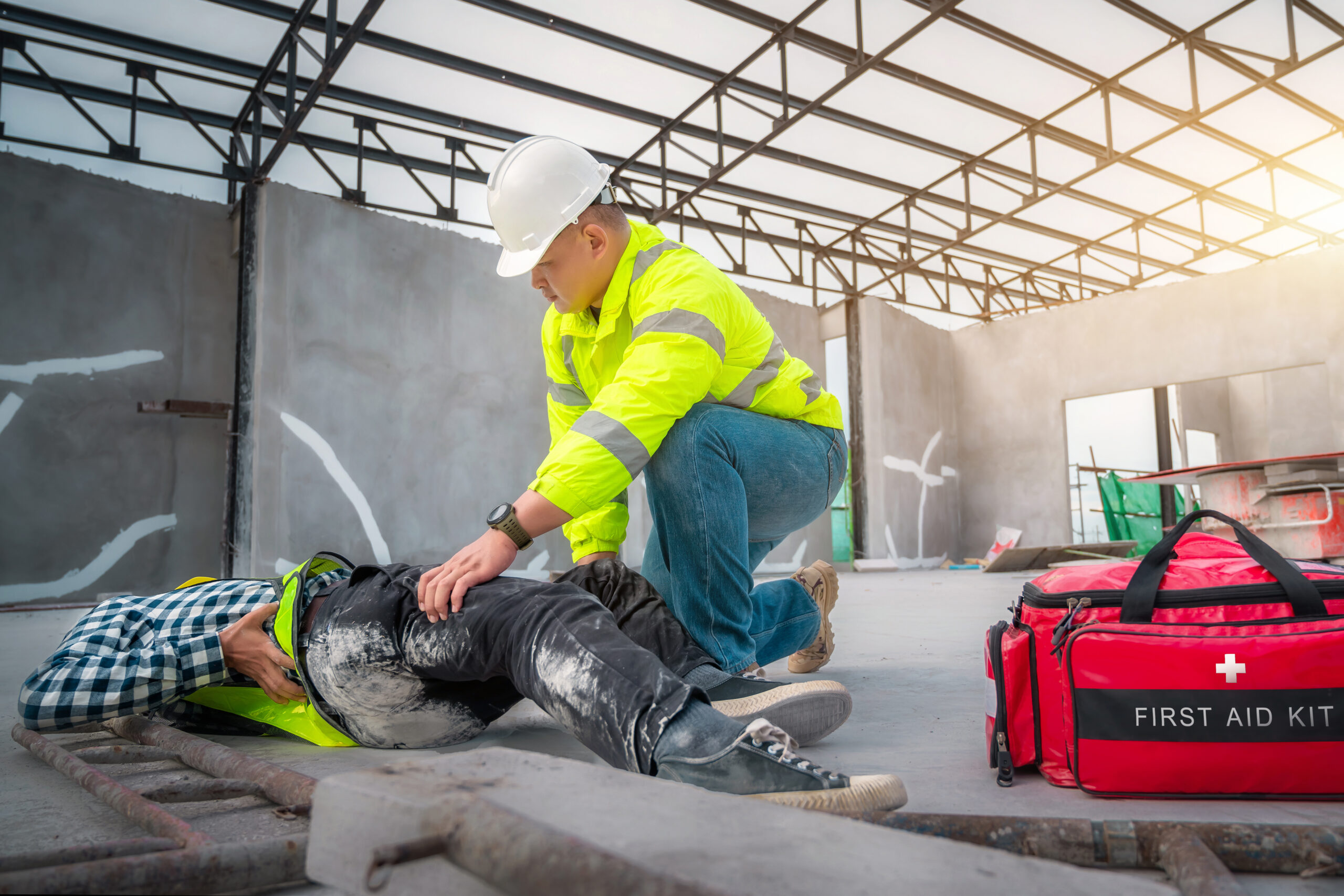
Alberta’s OHS legislation organizes workplaces into three hazard categories: low, medium, and high. The classification isn’t arbitrary. It’s based on the types of tasks being performed, the likelihood and severity of potential injuries, and the conditions workers are regularly exposed to on site.
Low-hazard environments typically include office settings or light retail. Medium-hazard workplaces might involve general labour, light manufacturing, or service industries where some physical risk is present. High-hazard classifications are commonly applied to construction, oil and gas, forestry, and heavy industrial settings, where workers face risks like falls from height, confined space entry, chemical exposure, or powered mobile equipment.
Every first aid obligation that follows is shaped by the hazard level assigned to a site. Getting that classification right matters, and it matters early.
Why Distance to a Healthcare Facility Is a Formal Factor
One requirement that catches many employers off guard is how much weight is given to proximity to medical care. Under Alberta OHS rules, the distance from a worksite to the nearest healthcare facility is one of three variables used to determine how many certified first aiders must be on shift at any given time.
The reasoning is straightforward. A remote industrial site in northern Alberta, hours from a hospital, cannot rely on emergency services arriving quickly, so the regulation compensates by requiring more trained personnel to be kept on site. In many cases, this means high-hazard remote sites are assigned the most demanding first aid staffing ratios of any workplace category.
The other two variables are the degree of hazard and the number of workers per shift. All three are considered together, not in isolation.
Basic vs. Intermediate First Aid: Choosing the Right Course
Selecting the right course starts with understanding what each one covers and how long it takes. Basic (emergency) First Aid is a 1-day, 8-hour course. Foundational emergency response skills are covered, and it’s suited to lower-hazard environments or situations where a more advanced level isn’t required by regulation.
Intermediate (standard) First Aid is a 2-day, 16-hour course. The core content is similar to Basic, but Intermediate goes further; additional skills are required to be demonstrated and tested. Modules include Airway Management, Breathing Management, Medical Emergencies, and Spinal and Neurological Emergencies, among others.
A blended format is available for Intermediate: 5 hours of theory instruction are completed online, followed by one full day of in-person practical skills training and testing. Regardless of how theory instruction is completed, all hands-on skills must be demonstrated in person with an approved trainer.
What Qualifies as an Approved Training Provider in Alberta
Not every first aid course meets Alberta’s legal requirements. Training providers must appear on the Alberta Approved Training Agencies list, which is maintained by Alberta OHS. First aid certifications issued in Alberta are provincially recognized, and the training must comply with CSA Standard Z1210-17, which was developed to harmonize certification standards across Canada.
Reputable courses are expected to be compliant with Provincial Legislation, follow the most recent CSA standards, meet Industry Best Practices, and meet the Principles of Adult Education. A knowledge portion with testing must be included, followed directly by a practical hands-on skill demonstration and testing portion.
Training providers must be approved by employers for their workforce. That responsibility sits with the employer, not with a third-party organization.
What the Curriculum Actually Covers
A well-structured first aid training course in Alberta covers more than basic bandaging. Airway Management, Breathing Management, Medical Emergencies, and Spinal and Neurological Emergencies are all typically included in the curriculum. Both Basic and Intermediate courses address these areas, though a higher level of demonstrated skill is required for Intermediate.
For construction and industrial workplaces specifically, the training context matters. Workers in these environments may face situations involving falls from height, powered mobile equipment incidents, confined space emergencies, or chemical exposure. The training fundamentals remain the same across settings, but after certification is issued, those fundamentals are expected to be applied by employers to their specific workplace conditions, so that genuine worker competency is built over time.
Classes typically run with 6 to 20 participants, which allows for adequate hands-on practice time.
Compliance Obligations Beyond the Training Itself
Completing a first aid training course is one piece of a larger compliance picture. Alberta OHS requires that documented training records be maintained and that first aid supplies be kept readily available across all workplaces, not just construction sites. These are mandatory obligations at every industry level and across all hazard classifications.
Documented records serve a practical purpose. If a site is visited by an OHS Inspector, employers need to show that certified training was completed, that it was delivered by an approved provider, and that it meets the required standard for the site’s hazard classification.
Keeping those records current and accessible isn’t optional; it’s part of what it means to run a compliant workplace in Alberta.
Renewal Timelines and Re-Certification Options
First aid certificates issued in Alberta are valid for three years. That timeline applies to both Basic (emergency) First Aid and Intermediate (standard) First Aid. Basic Life Support CPR carries its own separate renewal requirements, which are distinct from the standard certificate validity period, so both timelines should be confirmed with your training provider.
For workers who currently hold a valid Intermediate (standard) First Aid certificate, a 1-day re-certification course is available. The full two-day program doesn’t need to be repeated. A theory instruction component and a hands-on practical skills and testing portion are still included in the re-certification course.
Staying ahead of expiry dates is one of the simpler compliance tasks, but it’s one that gets missed more often than it probably should, bit by bit, until a renewal window has already passed.
Getting the Right Training for Your Site
For construction and industrial employers in Alberta, first aid training requirements aren’t a formality. They’re tied directly to the hazard profile of each site, the number of workers on shift, and how far that site sits from medical care. Getting those variables right, and choosing a training provider who meets Alberta OHS standards, is what separates genuine compliance from a paperwork exercise.
Western Canada Fire & First Aid works with businesses across Alberta to help them understand their obligations and connect with approved training that meets the requirements. Whether a site is classified as low, medium, or high hazard, the right first aid training course is available.
Visit wcff.ca to learn more about workplace safety training options for your team.
FAQ
Q: What is the difference between Basic and Intermediate First Aid in Alberta?
Both courses cover core emergency response content, including airway and breathing management, medical emergencies, and spinal injuries. The difference is depth and duration. Basic (emergency) First Aid is completed in one day; Intermediate (standard) First Aid runs two full days, and additional practical skills are required to be demonstrated and tested. A blended format is also available for Intermediate, with 5 hours of theory instruction completed online and one full day of in-person hands-on skills.
Q: Who is responsible for making sure first aid training meets Alberta OHS requirements?
Employers carry that responsibility. After certified training is issued, the training fundamentals are expected to be taken by employers and applied to their specific workplace to ensure worker competency. The training program that is selected must also be one that would withstand scrutiny from an Occupational Health and Safety Inspector. Choosing a provider from the Alberta Approved Training Agencies list is a necessary starting point, but program evaluation ultimately rests with the employer.
Q: How long is a first aid certificate valid in Alberta, and when does it need to be renewed?
First aid certificates issued in Alberta are valid for three years. Basic Life Support CPR has its own renewal requirements, which are kept separate from the standard first aid certificate timeline. For those holding a valid Intermediate (standard) First Aid certificate, a 1-day re-certification course is available rather than repeating the full two-day program. Worth confirming with your training provider which renewal path applies.
Q: Do high-hazard workplaces in Alberta need more first aiders than low-hazard ones?
Yes. The number of required first aiders increases with hazard level, shift size, and distance from a healthcare facility. A remote high-hazard site with a large crew will have significantly higher first aid staffing obligations than a small low-hazard office, and the regulation is specific about it.
0 Comments